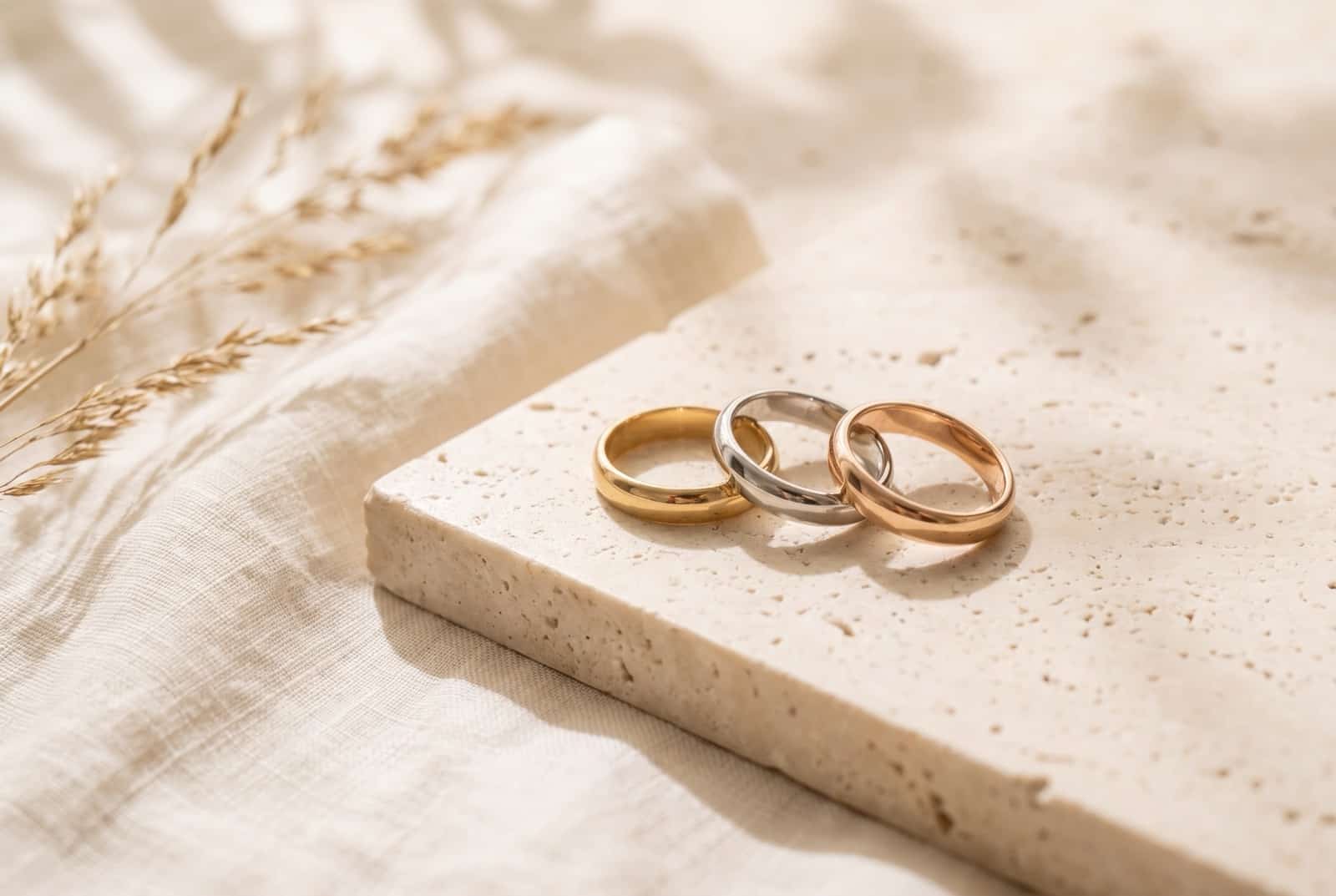
Anyone choosing a wedding ring, an engagement ring or another piece of jewellery will sooner or later face the question: yellow gold, white gold or rose gold? Then there are numbers such as 333, 585 or 750 stamped on many pieces. In this article we explain what lies behind the different colours of gold, what the numbers mean and what to keep in mind when it comes to care and skin sensitivity.
First, the essentials: pure gold, also called fine gold, is very soft. A ring made of pure gold would scratch quickly and bend easily. That is why gold for jewellery is almost always mixed with other metals. This mixture is called an alloy.
The added metals make the gold harder and at the same time determine its colour. Typical additions are silver, copper, palladium or zinc. Depending on which metals are used and in what proportion, the result is yellow gold, white gold or rose gold.
What 333, 585 and 750 mean
The number on a piece of jewellery, known as the hallmark, shows the fine gold content in thousandths:
- 333: 333 out of 1000 parts are pure gold, roughly a third. This equals 8 carat.
- 585: 585 out of 1000 parts are pure gold, a little more than half. This equals 14 carat.
- 750: 750 out of 1000 parts are pure gold, three quarters. This equals 18 carat.
The higher the number, the more gold the piece contains and, as a rule, the richer the colour. A higher gold content does not automatically mean a ring is more robust, though. 585 gold is very popular for everyday wear because it strikes a good balance between gold content and durability. 750 gold is more valuable and has a deeper tone. Both alloys are frequently chosen for wedding rings.
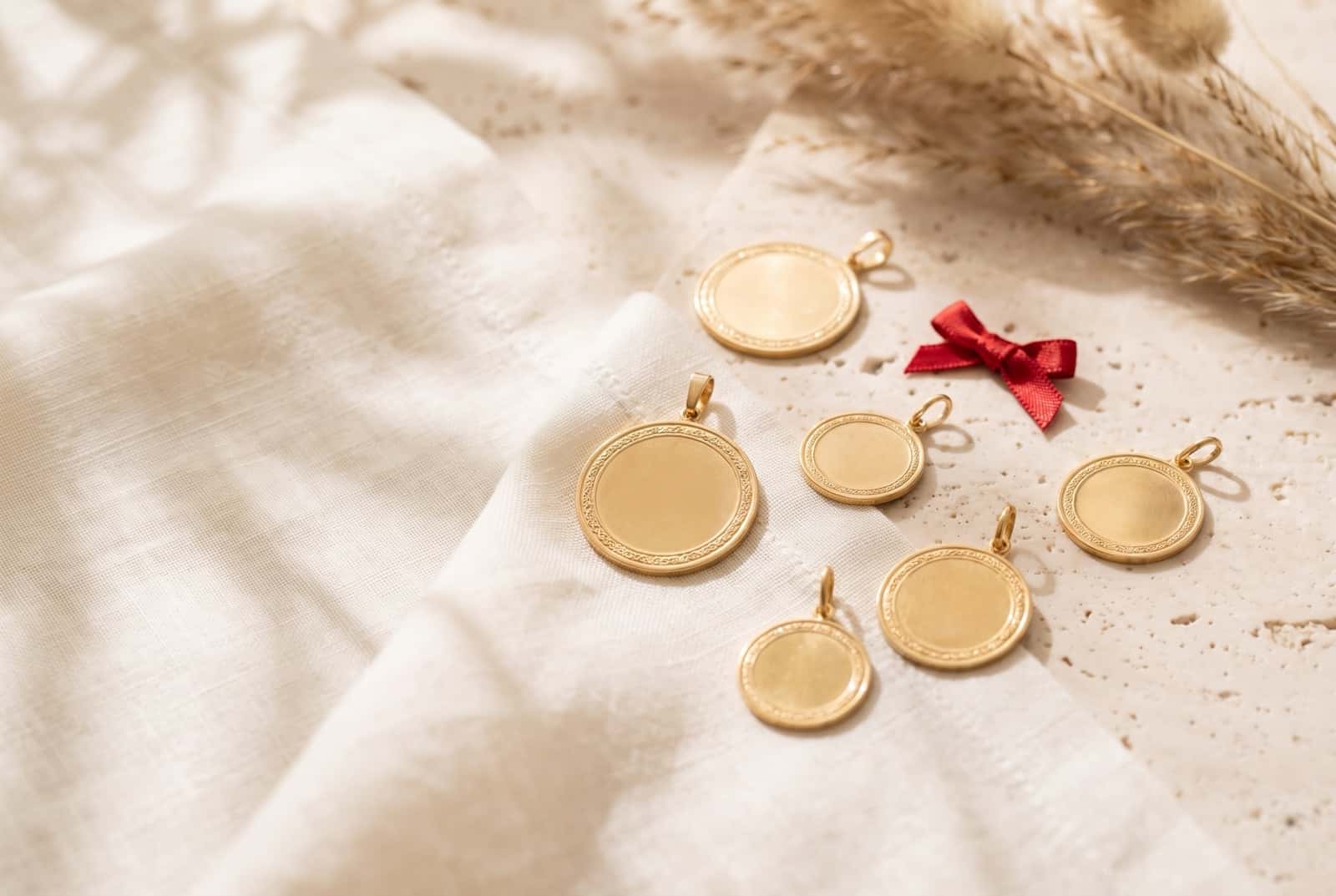
Incidentally, Turkish gold coins and many bangles are 22 carat, which is 916 gold. Their gold content is higher still.
Yellow gold: the classic
Yellow gold is the colour most people associate with gold. Besides fine gold, it usually contains silver and copper in a balanced ratio. The higher the fine gold content, the warmer and stronger the yellow glow.
Yellow gold looks classic and timeless. Small scratches from everyday life are less noticeable, and a polish brings the shine back nicely.
White gold and rhodium plating
White gold is created when gold is alloyed with pale metals such as palladium or silver. The alloy itself is not snow white, but has a slightly warm, greyish or yellowish sheen.
To make white gold look bright, it is often rhodium plated. A very thin layer of rhodium, a metal from the platinum group, is applied. This layer gives the cool, bright shine. Over time it wears away, especially where there is a lot of contact, such as the inside of a ring. The natural colour of the alloy then shows through again. This is not a defect but completely normal. Fresh rhodium plating can restore the bright finish.
Rose gold: warm and subtle
Rose gold, also called red gold depending on the intensity of the colour, gets its tone from a higher proportion of copper. The more copper, the redder the colour. Rose gold looks warm, soft and modern all at once, and combines well with other gold colours, for example in bicolour rings.
Thanks to its copper content, rose gold is fairly hard wearing. Over time the colour may deepen very slightly, which many people see as an attractive patina.
Skin sensitivity and allergies
Some people react to certain metals. The best known example is a nickel allergy. Some white gold alloys contain nickel because it whitens the colour. If you know or suspect that you react to nickel, palladium white gold or platinum is the safer choice when in doubt. Feel free to ask which alloy is used when you buy. If you notice a skin reaction, a doctor is the right person to find out the cause.
Which colour suits me?
You often hear rules like "yellow gold for warm skin tones, white gold for fair skin". In the end, though, it is a matter of taste. What matters more is whether you like the colour, whether it goes with the rest of your jewellery and how you feel wearing it. The best way is to try different colours on your hand. Our wedding rings are available in yellow gold, red gold, rose gold, white gold, palladium white gold, platinum, palladium and silver, and bicolour is possible too.
To keep your jewellery looking its best:
- Take rings off for cleaning, gardening or sport.
- Clean gold jewellery now and then with lukewarm water, a little mild soap and a soft brush.
- Store pieces separately so they don't scratch each other.
- Avoid contact with chlorine, for instance at the swimming pool.
Would you like to compare the colours at your leisure? You are welcome to visit us at Wengengasse 33 in Ulm. We advise you in German and Turkish, with no obligation. We are open Monday to Friday from 10:00 to 19:00 and Saturday from 10:00 to 18:00.
Mein Juwelier Ulm
Wengengasse 33 · 89073 Ulm